Drum pumps are a vital tool in various industries that are used to transfer liquids from barrels and large containers. One of the main components of these pumps is their shaft. Using durable and suitable materials to make the shaft can have a great impact on the efficiency and useful life of the pump. In this article, we will examine the shaft with Hastelloy material in a drum pump, its features, advantages and applications.
Introducing Hastelloy
What is Hastelloy?
Hastelloy is the trade name for a group of nickel-molybdenum-chromium alloys known for their extremely high resistance to corrosion and oxidation. These alloys have a special chemical composition that gives them exceptional resistance to corrosive environments. Some of the popular types of Hastelloy include Hastelloy C-276, Hastelloy B-3, and Hastelloy G-30.
Hastelloy features
1. Corrosion resistance: Due to its special composition, Hastelloy has very high resistance to corrosion in acidic and corrosive environments.
2. Heat resistance: These alloys can operate at high temperatures and prevent physical and chemical changes.
3. High mechanical strength: Hastelloy has high strength and hardness, which makes it suitable for industrial applications.
Shaft with Hastelloy material in a barrel pump
The importance of the shaft in a barrel pump
The shaft is a key component in a drum pump that is responsible for transferring mechanical energy from the motor to the impeller. Choosing the right material for the shaft can have a major impact on the performance and service life of the pump.
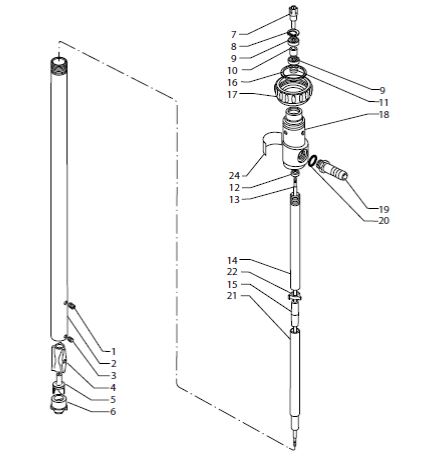
Reasons to use Hastelloy for shafts
1. High corrosion resistance: Drum pumps are commonly used in industrial environments that may contain corrosive chemicals. Using Hastelloy as the shaft material can prevent corrosion and damage to the shaft.
2. Long lifespan: Due to its resistance properties, Hastelloy can extend the useful life of the shaft and therefore the pump.
3. Reduced maintenance requirements: Shafts made from Hastelloy require less maintenance, which can reduce operating costs.
Advantages and disadvantages of shafts with Hastelloy material
Benefits
1. Corrosion resistance: Hastelloy is one of the most corrosion-resistant alloys, which can increase the useful life of the shaft in corrosive environments.
2. High strength: Shafts made of Hastelloy have high strength that can withstand heavy loads and harsh working conditions.
3. Performance at high temperatures: Hastelloy can operate at high temperatures without losing its mechanical properties .
Disadvantages
1. High cost: Hastelloy is one of the most expensive alloys, and its use can increase the cost of producing barrel pumps.
2. Difficulty working with the alloy: Due to Hastelloy’s special properties, its machining and welding processes require special equipment and skills.
Applications of shafts with Hastelloy material in barrel pumps
Chemical and petrochemical industries
In the chemical and petrochemical industries, barrel pumps with Hastelloy shafts are used due to their high resistance to corrosive materials. These pumps can transport various chemical liquids with high efficiency.
Pharmaceutical industries
In the pharmaceutical industry, the use of high-purity, corrosion-resistant materials is very important. Barrel pumps with Hastelloy shafts can transfer pharmaceutical liquids without causing contamination and maintaining quality.
Food and beverage industry
In the food and beverage industry, it is important to transfer liquids while maintaining hygiene and quality. The use of Hastelloy shafts in barrel pumps can meet these needs.
Conclusion
Using Hastelloy shafts in barrel pumps can provide many benefits, including high corrosion resistance, high strength, and long service life . Although the initial costs may be high, the reduced need for maintenance and increased pump service life can offset these costs. Given the wide range of applications of these pumps in various industries, including chemical, pharmaceutical, and food, the use of Hastelloy shafts can help improve the efficiency and quality of industrial processes.