Foam formation is a common problem in many chemical and processing industries during the production or transportation of liquids. This phenomenon not only reduces product efficiency and quality, but can also lead to equipment damage and increased maintenance costs, as well as compromise liquid handling systems. Therefore, so-called defoamers are used to prevent or eliminate foam formation.
However, to pump or transfer these chemicals from tanks and drums to the production line, we need a precise, safe, and controllable tool. This is where antifoam drum pumps come into play.
Definition of a barrel pump
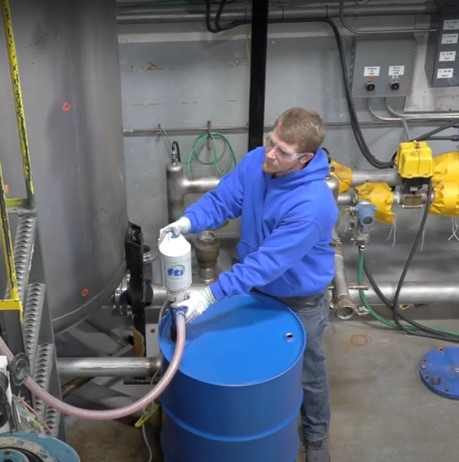
A drum pump is a device used to drain, transfer, and fill liquids from containers such as barrels, cans, and jars. These pumps typically consist of a long suction tube inside the barrel that forces the liquid out using an electric, pneumatic, or even hand-operated motor.
Drum pumps are among the most commonly used equipment types in industry due to their simple design, light weight, portability, and compatibility with a wide range of working fluids . They are used to transport chemicals, oils, acids, cleaning agents, and additives such as defoamers.
Why use a drum pump for foam control?
Defoamers are typically stored in 200-liter drums or barrels and must be carefully and precisely filled into the treatment tanks. This manual process is not only dangerous but also increases the risk of contamination and waste.
Drum pumps make this process safe, fast, and easy to control . The advantages of using drum pumps for foam suppression are:
-
Pumping can be carried out without the operator having direct contact with chemicals.
-
Reduce the risk of spills, contamination, or injury to employees.
-
High-precision injection of defoamer
-
Reduce cylinder emptying time and improve productivity
-
The available materials are corrosion and chemical resistant.
Application of the antifoam barrel pump
Antifoam cylinder pumps are used in various industries, including:
-
Water supply and wastewater treatment: foam control in settling tanks and aeration systems.
-
Oil, gas and petrochemical industries: Prevention of foaming during the separation and transportation of petroleum liquids.
-
Paint and varnish industry: Prevents blistering and maintains the final quality of paints and coatings.
-
Manufacturers of laundry and hygiene products: Control of excessive foaming during the mixing process.
-
Food and pharmaceutical industries: Precise and safe use of food defoamers.
Important points when choosing a drum defoamer pump
To ensure optimal pump performance in this case , it is important to consider the technical and chemical properties of the defoamer. When selecting a pump, consider the following:
-
Viscosity of the liquid: If the defoamer is liquid, a centrifugal pump or a conventional pump is sufficient. However, for thicker materials, a piston pump should be used.
-
Material of the pump body and pump hose: Since defoamers can contain corrosive compounds, the pump material should be made of stainless steel, polypropylene (PP) or PVDF.
-
Motor type: In environments with explosive or flammable vapors, it is best to use an air-driven pump or an explosion-proof model.
-
Length of the suction pipe: Depending on the height of the bucket (usually 70 to 150 cm), the length of the pipe should be chosen so that the liquid flows to the bottom of the bucket.
-
Flow and pressure: To ensure consistent material injection, a pump with a flow rate that meets the requirements of the production line should be selected.
-
Easy maintenance: Simple design and quick cleaning are important features of high-quality pumps.
The main components of a barrel pump
-
Motor: A power source that can be electric, pneumatic, or manual.
-
Straw: a long tube that reaches the bottom of a bucket.
-
Impeller or positive displacement motor: generates pressure and moves the fluid.
-
Outlet hose: The path through which the fluid flows from the cylinder to the tank or fill line.
-
Sealed connections: prevent leaks and ensure user safety.
Advantages of using drum pumps in foam suppression systems
-
High safety: No need to lift or tip heavy buckets.
-
Save time: Empty the bucket quickly in just a few minutes.
-
Higher productivity: less production line downtime due to excess foam.
-
Injection accuracy: the ability to precisely control the volume and flow rate of the defoamer .
-
Reduces waste: Prevents materials from accumulating at the bottom of the drum.
-
High strength: Made of chemical-resistant materials .
Maintenance and safety tips
To extend the service life of the pump and ensure the safety of the operator, the following points should be observed:
-
Before each use, make sure the straw is clean and free of particles.
-
Place the pump vertically in the bucket to ensure full suction power.
-
After completing the work, flush the system with water or a compatible solvent to prevent the chemicals from drying and hardening.
-
Adequate ventilation is required in enclosed spaces or where chemical vapors are present.
-
Check O-rings and seals regularly and replace them if necessary.
-
If you do not plan to use the pump for an extended period of time, store it in a cool, clean and dry place.
Choose the right brand and model
Drum pumps from many brands are available on the Iranian market, including European, Chinese, and Iranian. When purchasing, consider factors such as motor power, material compatibility and antifoaming agents, customer service, weight, and ease of opening and closing.
Pumps manufactured in Germany and Italy are generally suitable for use in heavy industry, while pumps manufactured in Iran and China are cheaper and suitable for more general and economical applications.
Finally
Drum defoamer pumps are specialized devices used in various industries for conveying, transporting, and injecting defoamers. Their special design simplifies, speeds up, and makes the transport process safer, preventing material waste, environmental pollution, and personnel injuries.
Selecting the right pump type depends on the type of defoamer, operating conditions, and production line requirements. Overall, however, the use of this equipment can improve system performance and increase productivity.